Guide No. 02 · Fundamentals
What Makes a Product Truly Built for Life?
The five tests that separate goods built for decades from goods built for a season, with what to check in a shop or on a product page.
Plenty of products call themselves “built to last.” Very few explain how. Here’s how to check for yourself, using five tests that apply to almost anything: a bag, a pair of boots, a pan, a jacket, a tool.
Test 1: Material
The raw material sets the ceiling. Good construction can’t make a weak material last.
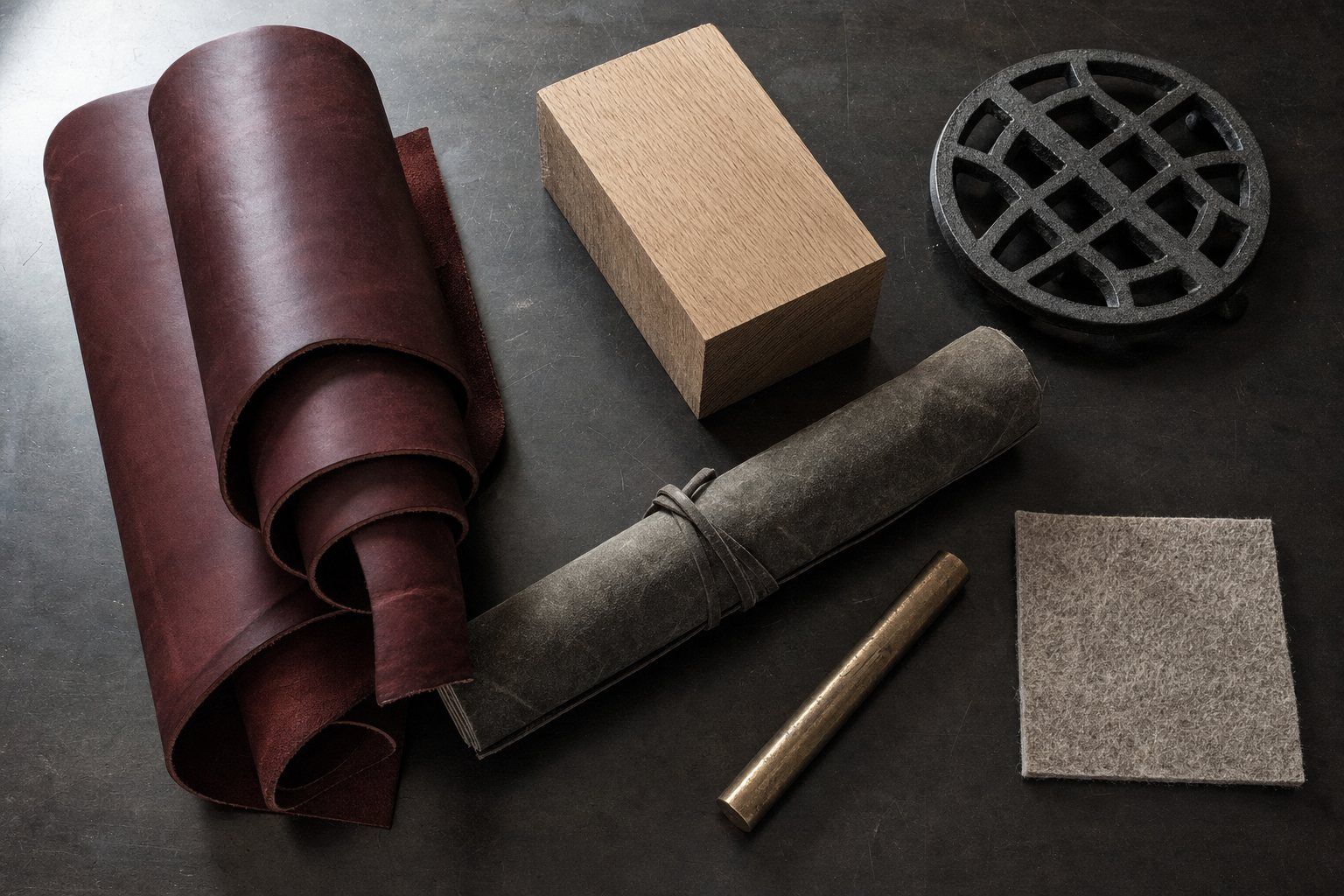
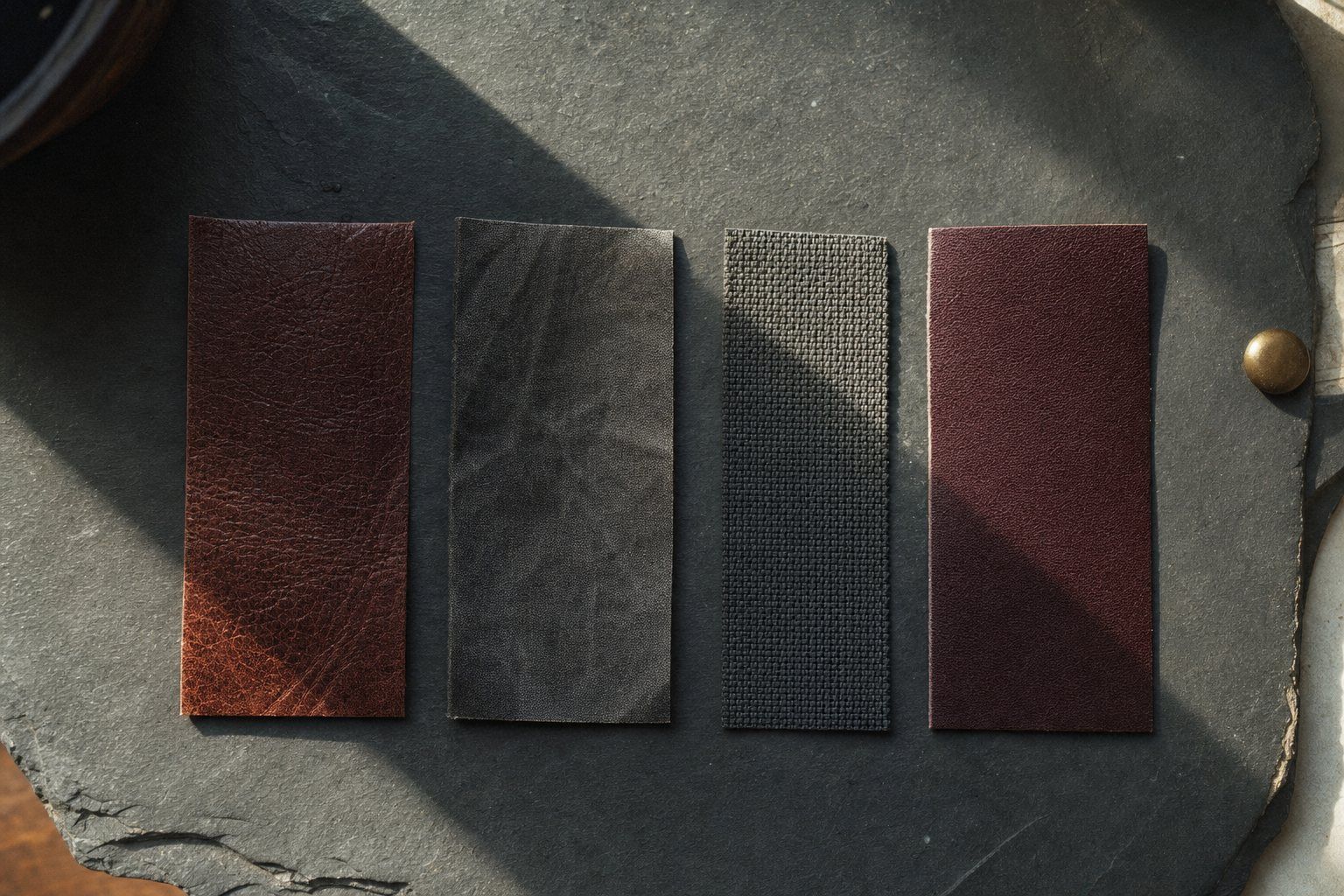
What lasts: full-grain leather, cast iron and carbon steel, solid hardwoods, heavy cotton canvas (often waxed), wool, brass, stainless and high-carbon steel.
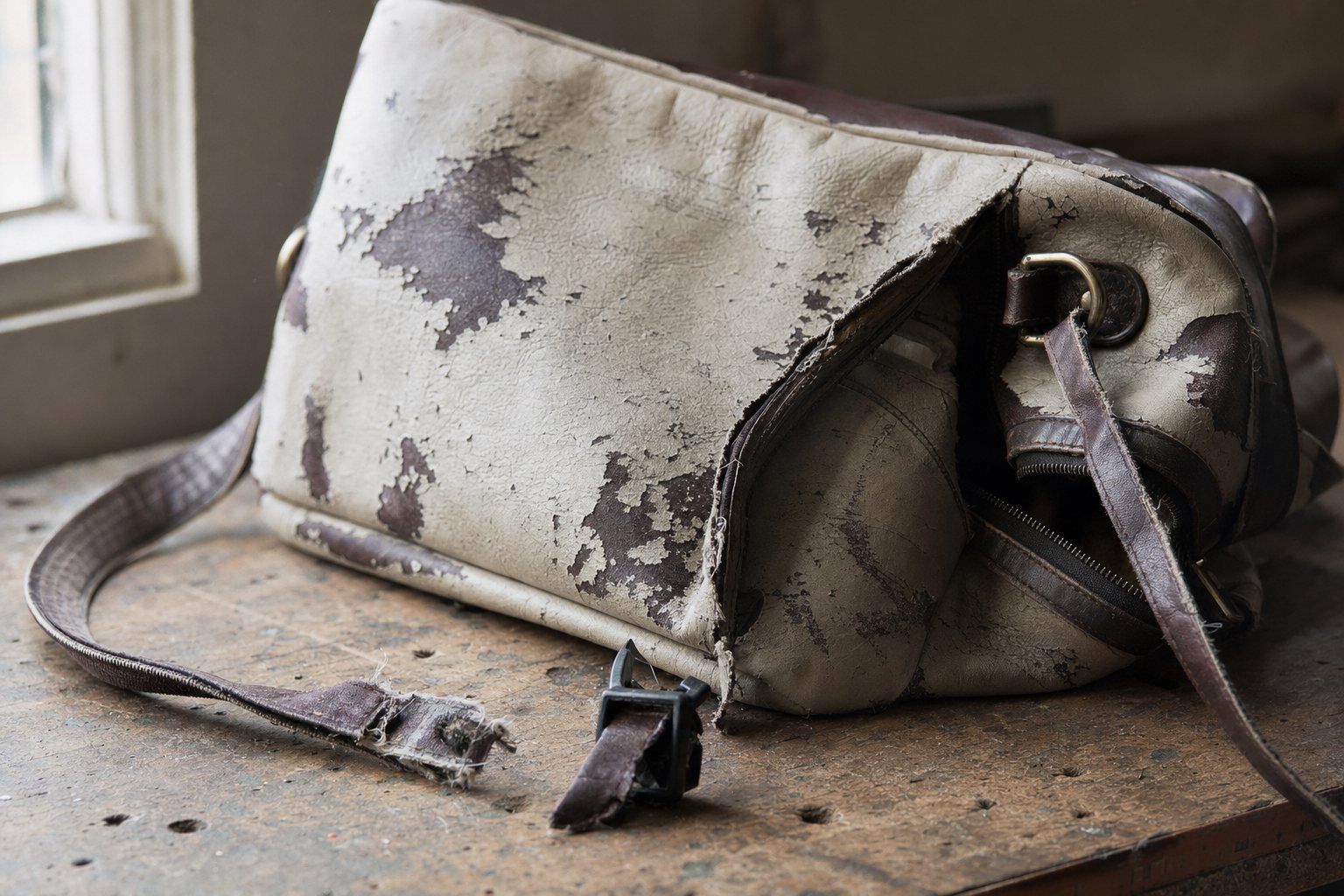
What usually doesn’t: bonded or “genuine” leather, thin PU coatings, particleboard, thin aluminum, non-stick coatings, light polyester fabrics with a coating on the back.
Two quick checks:
- Look at a cut edge. Solid materials look the same all the way through. Layered or coated materials show a sandwich.
- Feel the weight. Durable versions of most goods are noticeably heavier than cheap ones. Heavier isn’t always better, but very light is often a warning sign.
Our guide to materials that stand the test of time goes deeper.
Test 2: Construction
Most products don’t fail in the middle. They fail at joints and stress points: handles, straps, hinges, seams, sole edges. That’s where construction matters most.
Look for:
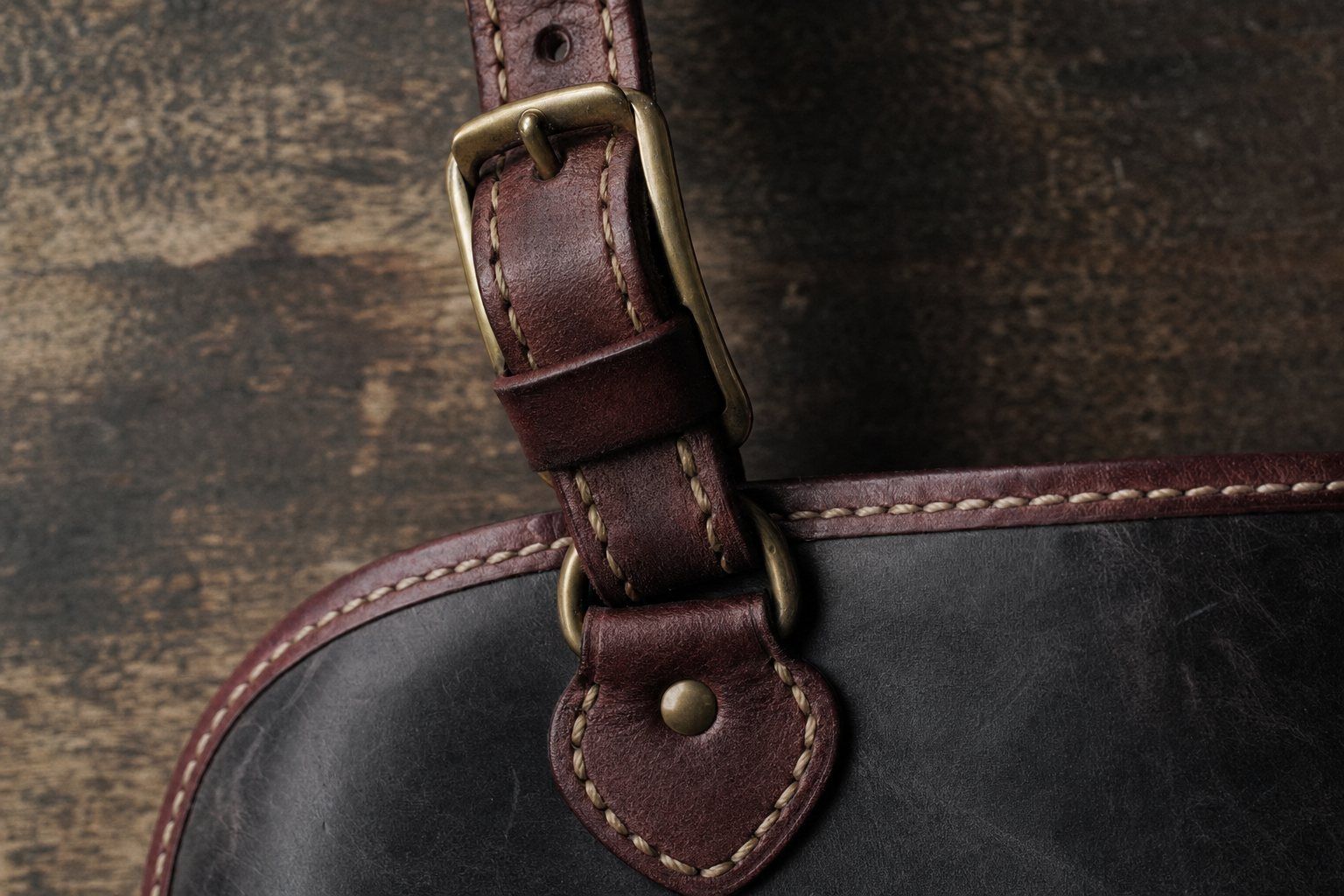
- Stitching, not just glue, at anything that carries weight. Glue is fine as a helper. It shouldn’t be the only thing holding a handle on.
- Rivets or bar-tacks (dense zigzag stitches) at handle and strap anchors.
- Reinforcement layers behind stress points, like an extra patch of leather under a handle.
- Even, tight stitching with the ends back-stitched or locked so seams can’t unravel.
- Metal hardware, not plastic, at buckles, rings and clips that bear load.
For the opposite list, see common signs of poor construction.
Test 3: Repairability
Everything wears eventually. The question is what happens then.
A product is repairable when:
- Worn parts can be replaced without destroying the item, such as a boot sole, a zipper, a strap or a handle.
- Fasteners are standard. Screws instead of rivets on tools, common zipper sizes on bags.
- Someone can do the repair. A local cobbler, tailor or leather shop, or the maker. Some brands offer repair services.
- It’s worth repairing. The repair costs a fraction of a replacement.
Glued, welded or molded-together products often can’t be repaired at all. More in why repairability matters more than trend.
Test 4: Care
Long-lived goods usually need a little maintenance, and they reward it. Leather gets conditioned, cast iron gets oiled, wood gets waxed, canvas gets re-waxed, blades get sharpened.
A good sign: the item looks better with age. Full-grain leather darkens and softens into a patina. Cast iron gets slicker with use. Denim and waxed canvas take on the shape of their owner. Cheap coated materials do the opposite: they peel, crack and look worse every month. See gear that gets better with age.
Test 5: Honest cost
The last test is about money. Divide what you’ll spend (purchase, upkeep, repairs) by the years you’ll actually use it.
| Cheap option | Built to last | |
|---|---|---|
| Price | $40 | $180 |
| Expected life | 2 years | 15+ years |
| Upkeep per year | $0 | $5 |
| Cost per year | $20 | about $17 |
The built-to-last option wins here, but only because you’d keep it for 15 years. If you only need it for three, the cheap one is the better buy. Use our cost per year calculator with your own numbers.
What doesn’t prove durability
Some signals sound reassuring but prove very little on their own:
- “Lifetime warranty.” Read the terms. Many exclude normal wear, require original receipts, or depend on a company that may not exist in 20 years.
- “Handmade” or “artisan.” Hand work can be excellent or poor. Judge the result, not the label.
- High price. See test 5. A brand can charge a lot for the same thin materials.
- Country of origin. Good and bad goods are made everywhere. Check the construction.
A one-minute shop check
When you’re holding the product, or zooming in on product photos, ask:
- What is it made of, and is that material solid all the way through?
- Where will it take strain, and is that spot stitched, riveted or reinforced?
- When the first part wears out, who can fix it?
- What upkeep does it need, and will I actually do it?
- How many years will I use it, and what does that make the cost per year?
If you get good answers to all five, you’ve probably found something built for life.