Guide No. 07 · Materials
Gear That Gets Better With Age
Why some materials improve with years of use while others only degrade, which everyday goods age best, and how to help them along.
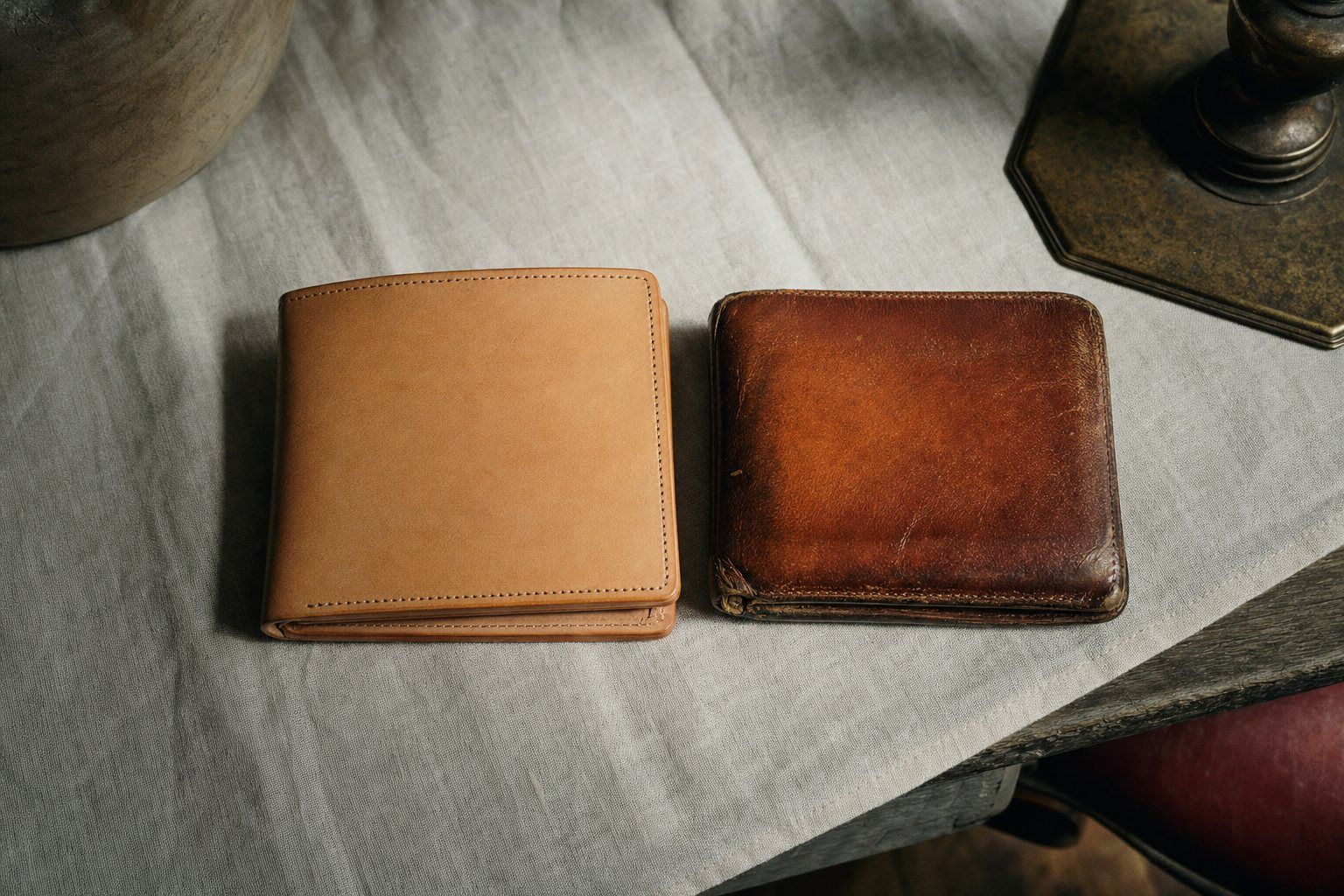
Most things look their best the day you buy them. A few look better after ten years. The difference is almost always about the surface.
Why some things improve
Gear that ages well has a surface made of the real material all the way through. As it’s used, that surface changes in ways that add character:
- Full-grain leather darkens with light, absorbs a little oil from your hands, and softens. That’s patina.
- Cast iron builds up layers of seasoning and gets slicker and darker with every use.
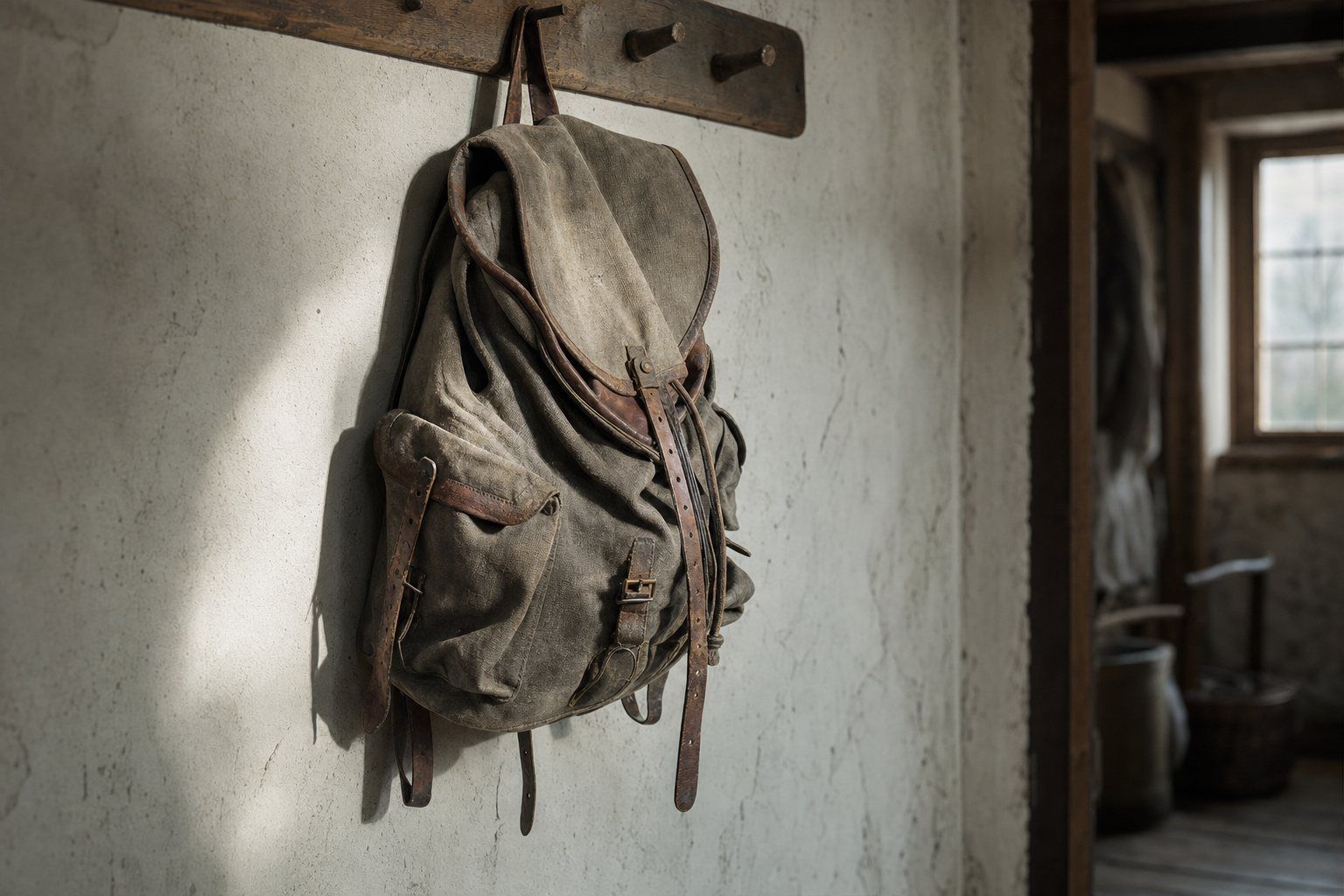
- Waxed canvas creases where you bend it, and the wax shifts into marks that map how you’ve used it.
- Raw denim fades at the knees, pockets and creases into a pattern unique to the wearer.
- Solid wood takes on a warm sheen where hands touch it.
- Brass tarnishes to a soft brown, then polishes bright where it’s handled.
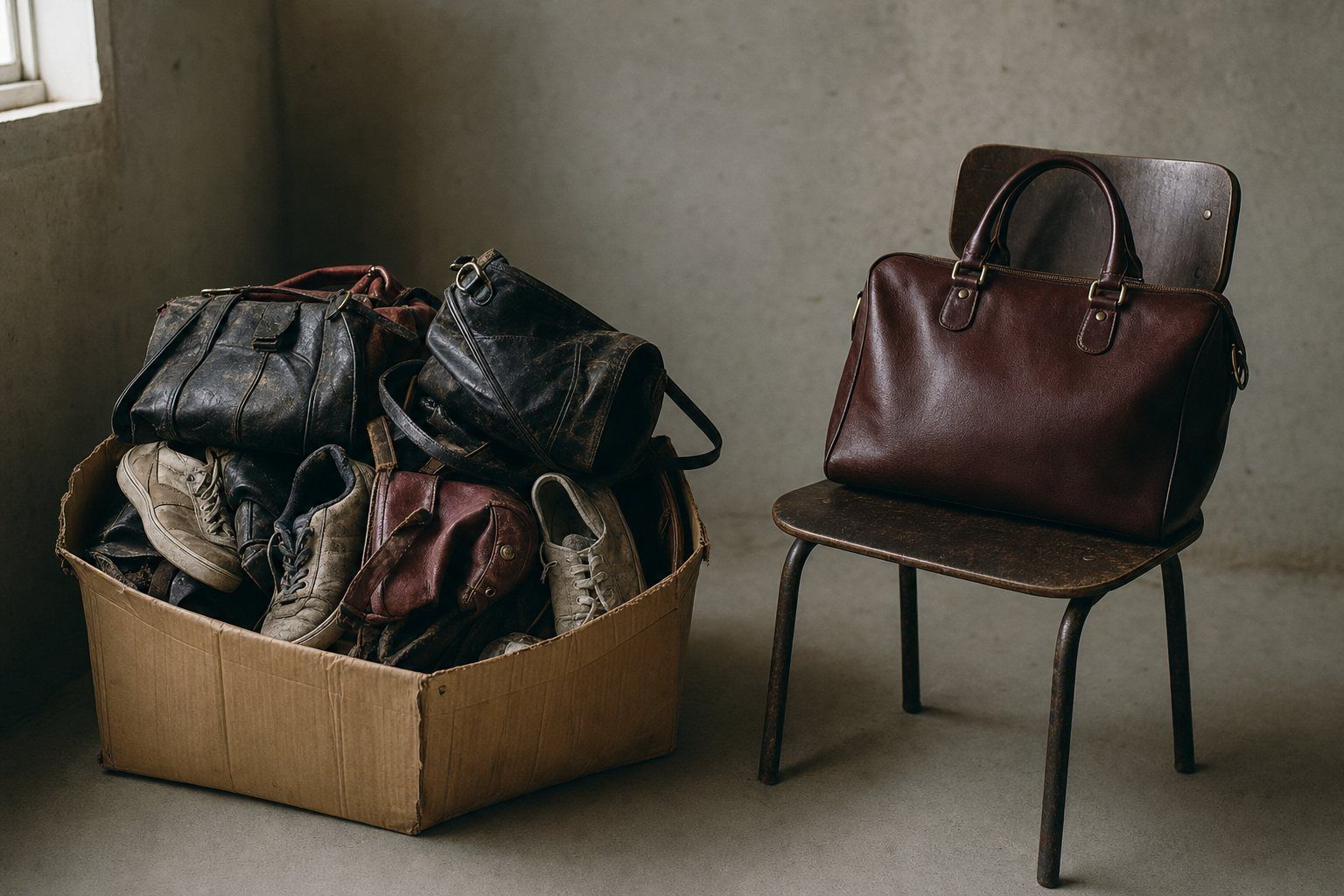
Gear that ages badly has a thin surface over something else: a painted coating on leather, a print on a veneer, a non-stick layer on a pan, a laminate on fabric. When that surface wears, it doesn’t develop character. It just looks damaged.
The everyday goods that age best
| Item | Ages well when it’s | What a good decade looks like |
|---|---|---|
| Wallet | Full-grain, vegetable-tanned leather | Darker color, softer feel, shaped to your cards |
| Belt | Single layer of full-grain leather | Even patina, a curve that fits you |
| Boots | Full-grain uppers, resoled as needed | Creased, polished, on their second or third sole |
| Skillet | Cast iron or carbon steel | Black, glassy seasoning |
| Bag | Full-grain leather or waxed canvas | Deeper color, softened shape, honest scuffs |
| Jacket | Waxed cotton, wool or leather | Creases and fades that look earned |
| Cutting board | Solid end-grain or edge-grain hardwood | Smooth, oiled, lightly marked |
| Watch | Steel case, mechanical movement | Fine scratches, still ticking after a service |
Patina vs damage
Not every mark is “character.” Patina is surface change on a material that’s still sound. Damage is a structural problem. Learn to tell them apart:
- Patina: darkening, softening, light scratches that blend in, shine on handled areas.
- Damage: cracks along creases, peeling, dry flaking, rot in stitching, warping, rust that pits the surface.
Patina needs no fixing. Damage needs care or repair before it spreads.
How to help gear age well
- Use it. Patina comes from use. Things kept in a box don’t develop it.
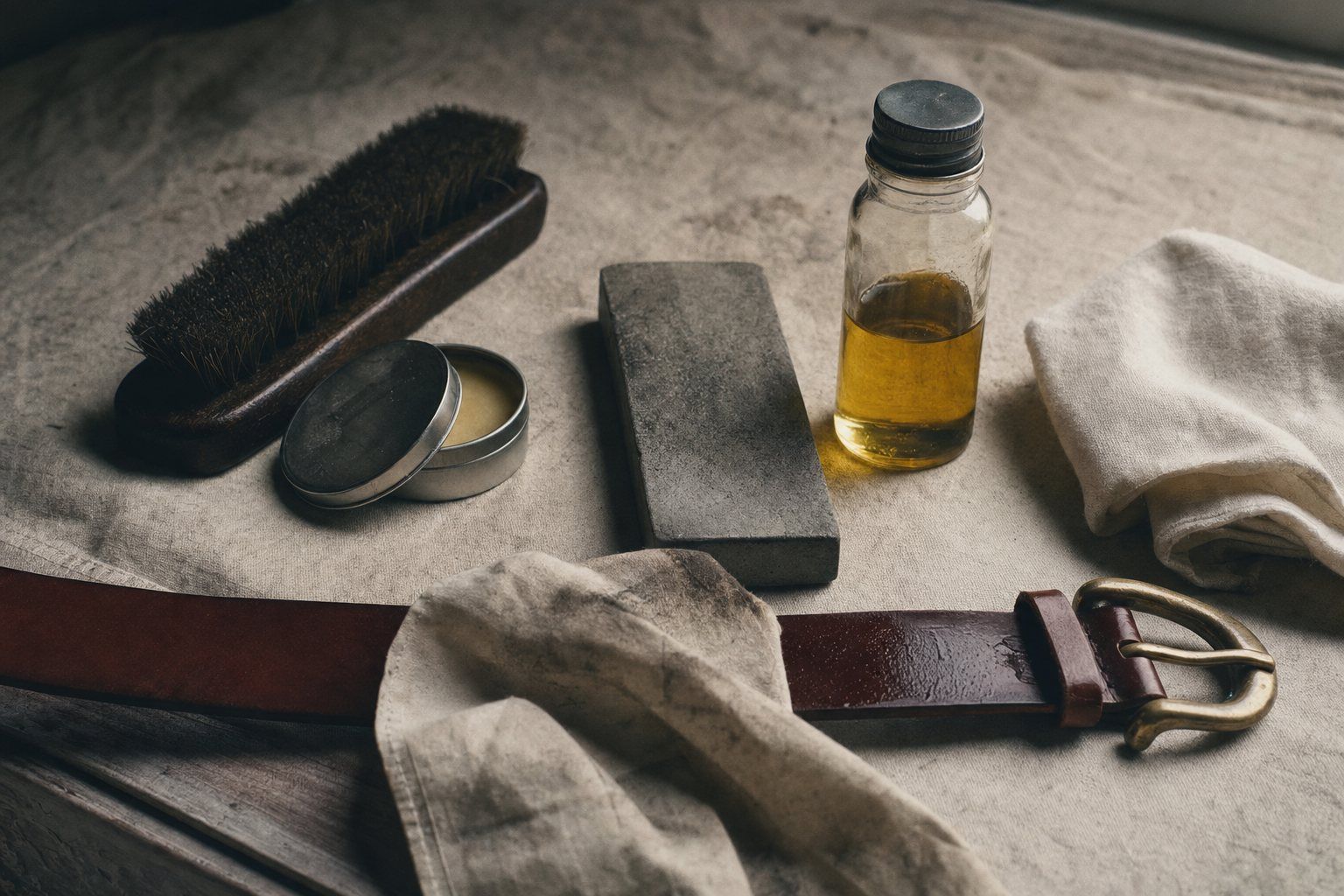
- Clean it lightly. Dirt is abrasive. Brush leather and canvas, wipe pans.
- Feed it occasionally. Condition leather when it looks dry, re-wax canvas when it stops beading water, oil wood when it looks pale. Our maintenance guide has intervals.
- Avoid the big killers. Prolonged soaking, direct heat like radiators, and storing things damp.
- Don’t over-treat. Too much conditioner makes leather soft and greasy, and too much oil makes wood sticky.
A note on vegetable-tanned leather
Leather tanned with plant tannins (vegetable-tanned) tends to show the most dramatic patina, changing from pale tan to deep honey or brown. Chrome-tanned leather, which is more common, is softer and more water resistant from the start but changes less over time. Both can last for decades. If patina is what you’re after, look for vegetable-tanned full grain.
For more on why the surface matters, see full grain leather vs other materials.