Guide No. 05 · Construction
Common Signs of Poor Construction
Twelve warning signs that a bag, shoe, jacket or tool won't last, how to spot each one in person or in product photos, and what good looks like instead.
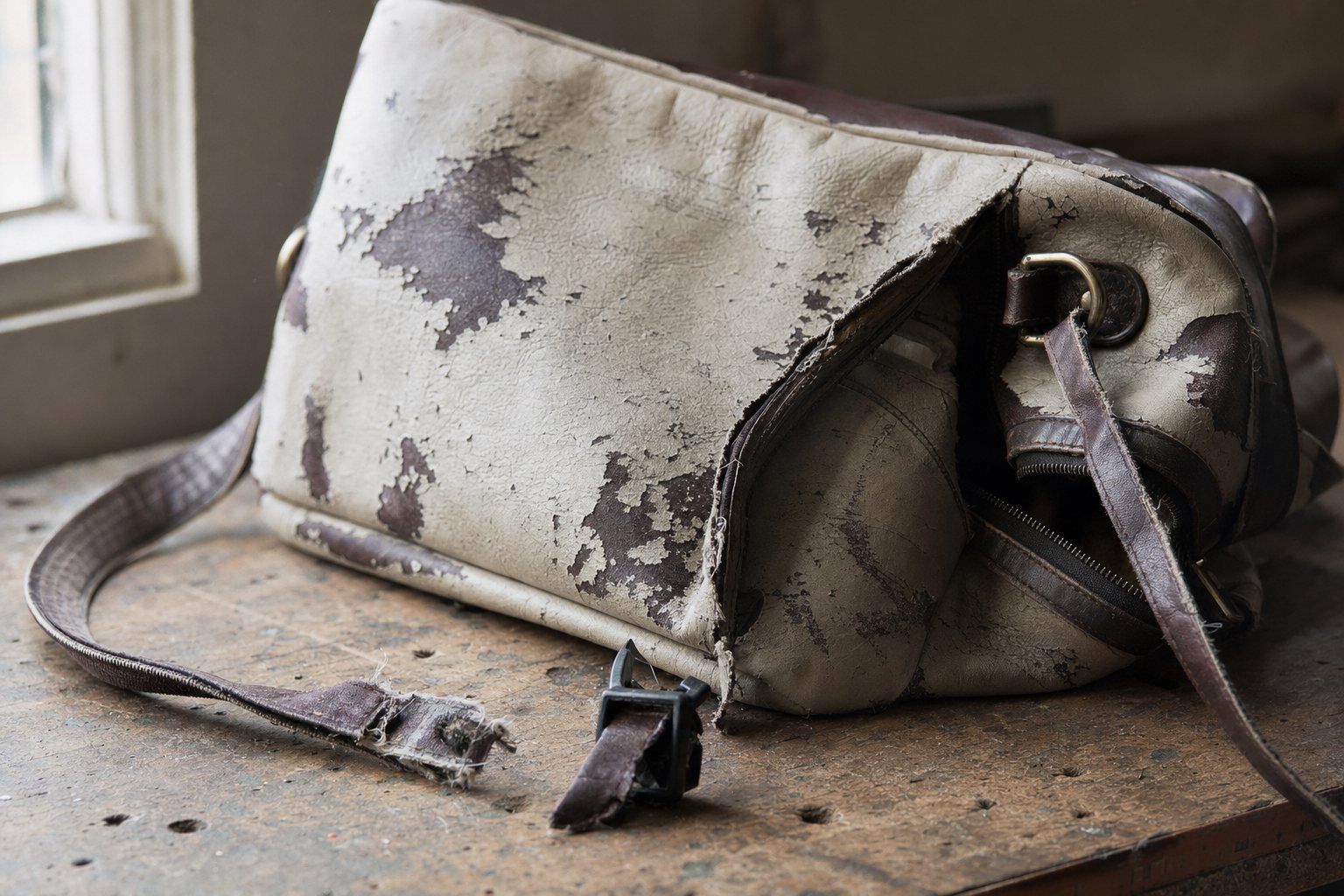
You don’t need to be an expert to spot goods that won’t last. Cheap construction tends to cut the same corners in the same places. Here are the signs to check, roughly in order of how often they cause failures.
1. Glue where there should be stitches
Glue is a fine helper, but it shouldn’t be the only thing holding a load. On bags, look at where handles and straps join the body. On shoes, look at where the sole meets the upper. If you can’t see stitching, it’s probably glued, and glue lets go with heat, flexing and time.
Good looks like: visible stitching through the joint, often with rivets or a stitched welt on shoes.
2. Plastic hardware on load-bearing parts
Plastic buckles, D-rings and strap clips crack, especially in cold weather. Zinc alloy parts painted to look like brass are another weak point. They can snap clean through under load.
Good looks like: solid brass, steel or stainless hardware. A magnet won’t stick to brass. Solid parts feel heavy for their size.
3. No reinforcement at stress points
Every handle anchor, strap attachment and corner takes far more strain than the rest of the item. Cheap goods treat them the same as everywhere else.
Good looks like: an extra layer of material behind the anchor, rivets, or bar-tacks (dense zigzag stitching) on fabric goods.
4. Loose, uneven or long stitches
Stitches that wander, vary in length or have gaps suggest rushed work. Very long stitches are weaker. Loose thread pulls through and snags.
Good looks like: straight, even, tight lines, with the ends back-stitched so the seam can’t unravel.
5. Painted edges hiding layers
On leather goods, a thick shiny painted edge can hide a sandwich of thin leather, cardboard or foam. Paint cracks and peels over time and exposes what’s underneath.
Good looks like: burnished edges (smoothed and polished) on solid leather, or neat edge paint on a solid single layer. If you can see a layered cross-section, be wary.
6. Coated, bonded or “genuine” materials
A shiny plastic-feeling surface on “leather” is a coating. Bonded leather peels. Thin PU-backed fabrics delaminate. See full grain leather vs other materials.
7. Cheap zippers
Zippers are one of the most common failure points on bags and jackets. Very light zippers, especially thin coil zippers on main compartments, split and lose teeth.
Good looks like: a heavier, well-known zipper brand, metal or chunky molded teeth on high-stress openings, and a pull that runs smoothly.
8. Thin, light materials
Not every light thing is weak, but in most categories durable versions are noticeably heavier. A leather belt you can fold like paper won’t last. A skillet that feels like a cookie sheet will warp.
9. Lining doing structural work
Cheap bags often rely on a thin lining glued in to give them shape. When the lining tears, the bag collapses. On good bags, the outer material carries the load and the lining is just a lining.
10. Nothing you can unscrew
On tools, furniture and appliances, rivets and welds instead of screws and bolts often mean nobody intended it to be repaired. See why repairability matters more than trend.
11. Vague materials in the description
“Premium material,” “PU leather,” “metal hardware” and “durable fabric” usually mean the seller would rather not say. Makers of good goods tend to be specific: full-grain leather, solid brass, 18 oz waxed canvas.
12. A design built around this year’s trend
Trendy details like extra hardware, odd shapes or printed surfaces don’t directly cause failure, but they’re a hint that the product was designed to be replaced. Simple, classic shapes are easier to make well and to repair.
How to check from product photos
Shopping online, zoom in on:
- where handles and straps meet the body;
- the edges of leather pieces;
- buckles and rings (shiny, uniform color can mean plating);
- the inside, if there’s a photo of it;
- shoe soles from the side, looking for stitching.
If the listing has no close-ups of any of these, that tells you something too.
Want the positive version of this list? Read what makes a product truly built for life.