Guide No. 06 · Repair
Why Repairability Matters More Than Trend
Why the ability to repair a product matters more than its warranty or its looks, which goods are easiest to repair, and how to check before you buy.
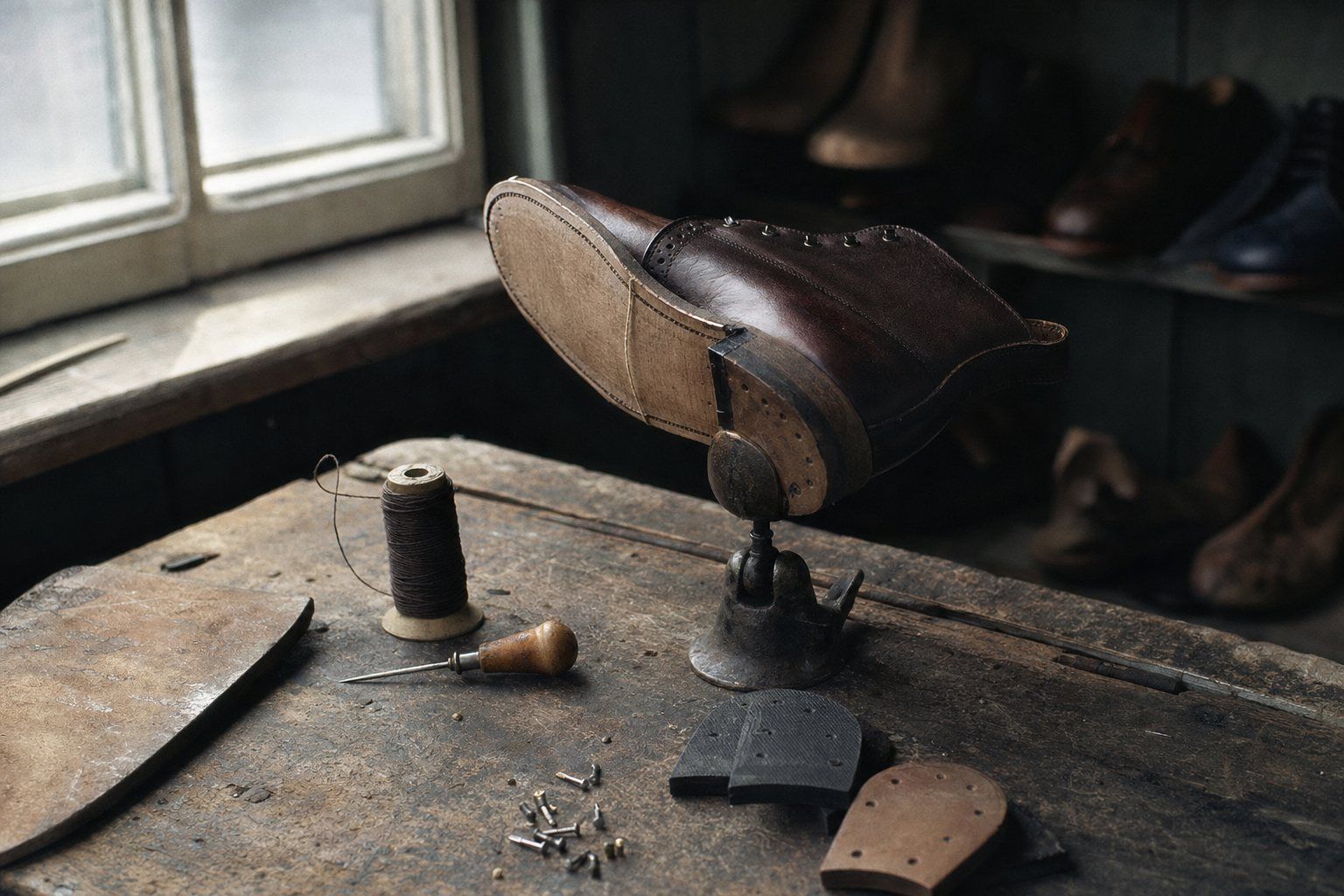
No product is indestructible. Soles wear down, zippers break, stitching gives, blades dull. The difference between a ten-year item and a forty-year item is often not how strong it is, but whether it can be fixed when the first part fails.
The part that fails first decides the life
Think of a product as a set of parts that wear at different speeds. A pair of boots might have uppers that could last 20 years and soles that last two. If the soles can’t be replaced, the boots last two years. If they can, the boots last 20.
That’s why repairability often matters more than raw durability. It lets the long-lived parts reach their full life.
Repairable vs disposable, by category
| Category | Repairable design | Disposable design |
|---|---|---|
| Boots and shoes | Stitched welt (like Goodyear welt) or stitch-down, can be resoled | Cemented (glued) sole, often not worth resoling |
| Bags | Stitched and riveted; standard zippers; separate straps | Glued seams, sewn-in proprietary hardware |
| Jackets | Replaceable zippers and buttons, durable fabric that can be patched | Bonded seams, laminated fabrics |
| Furniture | Solid wood, screws and joinery | Particleboard, cam locks, glued veneers |
| Kitchen | Cast iron, carbon steel, riveted handles | Coated pans with molded handles |
| Tools | Screws, replaceable blades and parts | Riveted shut, molded housings |
Why a warranty isn’t the same thing
A lifetime warranty sounds like the ultimate durability promise. It’s useful, but it has limits:
- Terms change. Companies are sold, merge or rewrite policies.
- Normal wear is often excluded. And normal wear is what eventually ends most products.
- The fix may be a replacement, which doesn’t help if the model is discontinued.
- You have to ship it, wait, and sometimes pay postage.
A product that a local shop can fix in a week doesn’t depend on any of that. The best case is both: a repairable product from a maker that also offers repairs.
Who does the repairs
Most repairs don’t need the original maker:
- Cobblers resole and reheel shoes and boots, and often restitch leather bags, replace zippers and fix straps.
- Tailors and alterations shops replace zippers, patch fabric and restitch seams.
- Leatherworkers rebuild handles, edges and straps.
- You, for the simple jobs: re-waxing canvas, re-seasoning cast iron, tightening screws, sharpening blades, sewing a button.
A useful habit: before buying something expensive, find out whether there’s a cobbler or repair shop near you that works on that kind of item.
How to check repairability before buying
- Find the part that will wear first. Soles, zippers, straps, hinges, the cutting edge.
- Is it attached in a way that can be undone? Stitches and screws can. Glue and molding usually can’t.
- Is it a standard part? Standard zipper sizes and buckle widths are easy to source.
- Does the maker sell spare parts or repair? Some do, and they’ll say so.
- Is the rest of the item worth saving? Good uppers, good leather and solid wood are. Thin coated materials aren’t.
Repair is also the greener choice
Repairing usually uses far less material and energy than making something new. A resole replaces a few hundred grams of rubber and leather. A new pair of boots replaces all of it. Keeping one good item in use for decades is one of the simplest ways to cut what you throw away.
For keeping things working between repairs, see how to maintain gear so it lasts decades. For spotting goods that can’t be fixed at all, see common signs of poor construction.